Employer Branding Examples with Video

Most organizations describe their culture. The best ones show it. That may seem like a small distinction — but for a candidate deciding whether to apply, it is everything.
This article is not a strategy guide or a list of expert tips. It is a tour of what Norwegian organizations are actually doing with employer branding — with concrete outcomes that demonstrate these approaches work. If you want a solid theoretical foundation first, we recommend starting with what is employer branding.
Gobi Stories is a Norwegian SaaS platform that makes it easy for organizations to collect, edit, and publish authentic employee videos — directly into career pages, job listings, and social media. The examples you will find here are all customers using Gobi in practice.
What makes a strong employer branding example?
A strong employer branding example is an organization that communicates who they are as an employer in a way that is authentic, specific, consistent — and linked to measurable results.
Four characteristics separate the strongest examples from the mediocre ones:
- Authenticity: The content comes from real employees speaking in their own words, not from approved talking points written by HR.
- Specificity: The communication shows what it actually means to work there — who you work with, what the role involves, what makes the culture distinct — not generic claims about a “great work environment.”
- Consistency: Employer branding is not a campaign you run once. The best examples treat it as a continuous practice with regularly refreshed content.
- Tangible results: The strongest employer branding initiatives can point to concrete numbers — more applicants, better applicant quality, shorter time-to-hire, or lower turnover.
A concrete illustration: an organization that publishes one polished brand video on its career page every other year is not doing employer branding — it is doing marketing. An organization that regularly collects short, vertical employee videos in 9:16 format and publishes them where candidates actually look is doing employer branding.
Baerum Municipality — authenticity in the public sector
Baerum Municipality is Norway’s fifth-largest municipality, with around 12,000 employees across 170 service locations. Every year, they recruit approximately 1,500 new employees — for roles ranging from kindergartens and schools to healthcare, technical services, and administration.
That is a remarkable volume. And it happens in direct competition with the private sector for many of the same candidates.
The challenge they faced is familiar to anyone responsible for recruitment in the public sector: it is demanding to craft job listings that genuinely stand out and convey what is truly unique about the workplace — without becoming cliché.
“We are very pleased with Gobi Stories. Video stories make our job listings more dynamic and engaging — and having employees tell their stories in their own words reaches candidates in an entirely different way.”
The solution was to adopt Gobi Stories to integrate authentic employee videos directly into job listings — tied to the municipality’s employer value proposition “join us and make your mark.” The integration with Webcruiter made it possible to embed video content into the existing recruitment workflow without additional technical complexity.
What is worth noting here: Baerum demonstrates that employee video is not the exclusive domain of private companies with large marketing teams. Public sector organizations with high recruitment needs and fierce competition for talent have just as much to gain from letting employees tell their stories.
Read the full story: Baerum Municipality’s Success with Gobi Stories
GK Group — employer branding on the career page
GK is Scandinavia’s leading provider of building technology, with revenues exceeding 6 billion NOK and around 3,000 employees across 100 offices in Norway, Sweden, and Denmark.
In 2022, GK set out to build new career pages. At the same time, they were launching the company’s first employer branding campaign. The challenge was to show candidates the breadth of what GK actually is — a group with significant geographic spread and a wide variety of roles, from engineers and technicians to project managers and support functions.
“We were about to launch the company’s first employer branding campaign and build new career pages when we came across Gobi, and it was a game changer. With Gobi, we can present who we are and what we do in a genuine, understated way. We can produce far more in less time, without needing a professional camera or multiple rounds in expensive editing tools.”
GK quickly got started with self-produced “stories” in which employees proudly shared their experiences. Following a successful launch of the new career pages, they expanded their use of Gobi to employee interviews, articles, and new communication formats. What started as a pilot in Norway has since stretched across borders and use cases: GK now uses Gobi in Norway, Sweden, and Denmark.
The GK example illustrates one of the most important insights in employer branding: it pays to treat the career page as a living surface updated continuously — not a static presentation.
Read the full story: GK Chooses Gobi Stories to Showcase Employees on Their Career Page
Hafslund — recruitment in the energy sector
Hafslund is Norway’s leading company in renewable energy. With an ambitious goal of playing a central role in the green transition, they depend on attracting the right talent — and the energy sector competes for many of the same engineering and technology professionals as the tech industry.
Their answer was to integrate Gobi Stories on their career page so that potential candidates could get a genuine glimpse into the day-to-day reality of working there. Employees introduce themselves and talk about their work — in a way that is far more personal than any job listing can achieve.
“This is just the beginning with Gobi Stories at Hafslund, and the possibilities grow as the organization becomes more familiar with the platform.”
What started as a recruitment initiative has already opened their eyes to broader use cases. Hafslund is now exploring how the video format can be used across communication channels — not just in recruitment, but also for internal communication and brand building.
Hafslund is a strong example of an organization that recognizes employer branding is not about budget or industry. It is about showing up — authentically and consistently — where candidates are actually looking.
Read the full story: Hafslund Chooses Gobi Stories
OBOS and Amedia — employer branding across two industries
Not every strong employer branding example begins with a finished strategy. Some start with a single question: what is it we actually want to show?
OBOS is one of Norway’s largest housing cooperatives and one of the country’s most recognized brands — but as an employer, they are far less visible than as a housing developer. Their employer branding work therefore focuses not primarily on reaching the widest possible audience, but on communicating a specific identity: what actually characterizes day-to-day working life there?
That answer cannot come from HR alone. It comes from employees who have worked there for a long time, who know the culture from the inside, and who can talk about it credibly. OBOS has invested in bringing precisely those voices forward — a good example of the fact that employer branding is as much about giving internal stories a channel as it is about creating new content from scratch.
Amedia is Norway’s largest media group, with more than 90 local newspapers and digital media outlets across the country. As an employer, they face a classic employer branding challenge: they have many and highly varied roles — from editors and journalists to IT architects and sales — and they operate in an industry where reputation as a place to work does not always match the size of the organization.
Amedia’s approach is to use their employees’ own stories to show the breadth of what a job at Amedia can mean. It is not one single narrative — it is many locally rooted stories that together build a picture of what it genuinely means to work in a company with roots across all of Norway.
Both examples illustrate why Gobi Autopilot — which sends personalized email invitations and lets employees film directly in the browser — is especially useful for large organizations that need content from many different environments without coordinating everything manually.
What these examples have in common
Look at these four organizations together and a pattern emerges:
- Employees tell the story — not the marketing department and not HR. The most effective examples are those in which real employees speak in their own words about real experiences.
- Video is the primary medium — not because it is trendy, but because it is the only format that transfers authenticity at a scale that text alone cannot match.
- Content is published where candidates actually look — directly on the career page, in job listings, and on social media. Not buried in an “about us” page no one finds.
- Employer branding is treated as an ongoing practice — not a one-off campaign. The best examples refresh themselves regularly with new content.
The last point may be the most important. It is easy to start with employer branding. It is harder to keep it going. Want to build a more comprehensive strategy around what you have seen here? Read our guide to employer branding strategy.
Frequently asked questions
What makes a good employer branding example?
A good employer branding example is an organization that communicates its identity as an employer in an authentic, specific, and consistent way — and can show it delivers results. That does not mean a polished production video. It means employees telling their own stories credibly, published where candidates actually look: on the career page, in job listings, and on social media.
How do Norwegian organizations use video in employer branding?
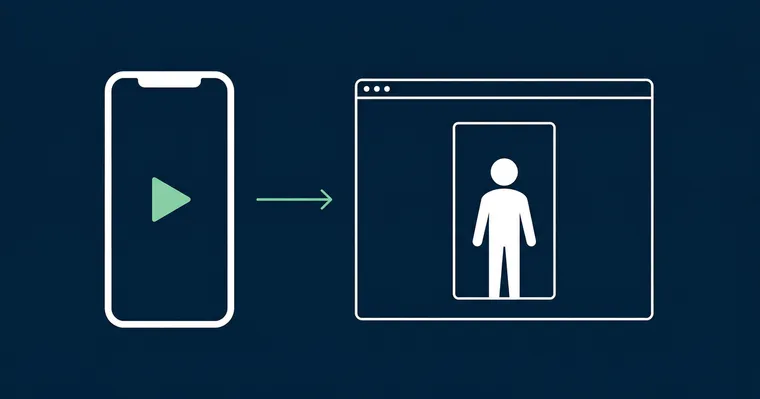
The most effective Norwegian organizations use short, vertical employee videos in 9:16 format directly on career pages and in job listings. Employees film themselves — often in the browser, without professional camera equipment — and talk about their working lives in their own words. The result is content that scores high on authenticity and candidate trust, at a fraction of the cost of traditional video production.
What does it cost to get started with employer branding video?
Costs vary, but it is entirely possible to get started without major investment. Employees can film with a mobile phone or directly in a browser. Tools like Gobi make it possible to collect, edit, and publish employee videos at a fraction of the cost of traditional production — no film crew, no editing agency. The biggest investment is the time to plan who should tell what.
What is the difference between employer branding and recruitment marketing?
Recruitment marketing involves tactical activities to fill specific roles — advertisements, candidate campaigns, and specific channels. Employer branding is the strategic work that builds reputation as an employer over time, and that makes recruitment marketing more effective. Employer branding is the foundation; recruitment marketing is what is built on top of it.
Can small and medium-sized businesses do employer branding too?
Yes — and it is often easier for them, because the culture is more visible and employees can more naturally be placed at the center of communication. You do not need a dedicated employer branding team or a large budget. A few genuine employee videos published regularly can make a significant difference. The most important thing is to start — not to get it perfect from day one.
The organizations that succeed most consistently with employer branding are not necessarily those with the largest budgets or a dedicated employer branding team. They are those that have understood that candidates do not want to read about culture — they want to see it. And that the only people who can show it credibly are the ones who live it every day.
Want to see how Gobi can help your organization do the same? See what Gobi does.