Attracting candidates: a practical guide

It has never been easier to post a job listing. And it has never been harder to attract candidates who are actually the right fit.
The paradox is not accidental. The more listings are published, the more noise your listing competes against. Candidates — particularly those with experience and options — filter out the generic. They no longer read job postings to make their decision. They research beforehand: LinkedIn profiles, Glassdoor reviews, career pages, employee posts on social media. By the time they eventually click on your listing, they have already formed an opinion.
That means the recruitment challenge has shifted. The problem is no longer distributing your listing across enough channels. The problem is shaping the impression a candidate forms long before the listing — in the passive phase when they are not yet actively job hunting.
Gobi Stories is a Norwegian SaaS platform that helps organisations collect, edit, and publish authentic employee videos — directly into career pages, job listings, and social media. This guide gives you concrete strategies for attracting the right candidates by meeting them where their attention actually is.
Why attracting candidates is harder than it should be
The most common assumption is that recruitment problems are about supply: not enough candidates, not the right skills in the market. But that is rarely the real issue. The candidates exist. The problem is that most of them are not actively looking for a new job.
Approximately 70% of the global workforce is what we call passive talent — skilled people in existing roles who are not actively searching, but who are open to making a move if the right opportunity appears. These candidates cannot be reached through job listings alone. They can only be reached through the content they encounter passively on social platforms and across the web — and that content shapes how they perceive you as an employer.
The implication is clear: employer branding and recruitment are not two separate disciplines. They are parts of the same process. The employer image you build today determines which candidates you attract tomorrow — regardless of whether they have seen a single listing from you.
What candidates are actually looking for
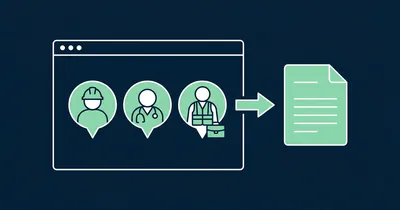
Modern candidates evaluate employers on three things: cultural fit, team personality, and what the working day actually looks like. None of these can be communicated credibly through a job listing alone.
Cultural fit is not about values on a wall or bullet points about flexible working hours. It is about whether the candidate can picture themselves as part of that organisation — whether they recognise something in the people and in the way you work. That recognition does not happen through text. It happens through faces, tone of voice, and context.
Team personality is what most job listings omit entirely. Who are the colleagues? What is the dynamic in the team? What do people talk about over lunch? These questions sound trivial, but they are decisive for candidates who already have a reasonable job and are weighing whether to make a move.
Day-to-day reality is what ultimately determines whether a candidate applies or moves on. Not what the org chart says the role is — but what people actually spend their days doing.
Consider an experienced candidate evaluating a role at your organisation. She does not start with the listing. She checks the company LinkedIn profile, scrolls through employee posts, visits the career page, and reads a few Glassdoor reviews. If all of this produces the same polished image — attractive office photos, generic quotes, nothing that stands out — she concludes quickly: “There is nothing here that tells me who they really are.” And she moves on.
That is the moment you win or lose the competition for her attention — long before she has seen your listing.
Five concrete ways video helps you attract candidates
Saying video matters is not enough. Here are five tactics you can implement.
1. Employee videos in the job listing
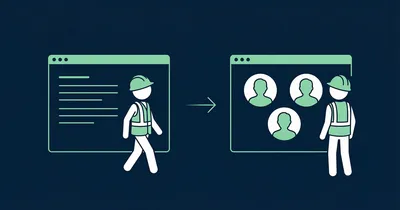
A 60-second clip from a team member in the job listing does more for your conversion rate than almost any other single change you can make. Not a company presentation — a genuine clip where a colleague explains what the role involves, who they work with, and what makes the team unique. The candidate encounters a face and a voice at the very first point of contact. That is a fundamentally different experience from reading bullet points. Read more in our guide to video in job postings.
2. Authentic content on the career page
The career page is the first place many candidates visit after hearing about you. A page with generic culture copy and stock images is invisible. A page with short, vertical employee videos in 9:16 format — real people from real teams talking about their working day — is something candidates actually stop and watch. Gobi Player makes it easy to embed these stories directly into the career page, with no cookie consent required from the candidate. Read more in our guide to career pages with video.
3. Employees as content creators on LinkedIn
Employees sharing genuine glimpses of their working life on LinkedIn build employer brand where candidates already are — rather than waiting for candidates to visit the career page. Content from real people travels further and drives more engagement than company posts. It does not need to be produced content: a phone clip from a project day, an honest post about what the role really involves, a photo from a team event. Authenticity is the competitive advantage.
4. Video in the interview invitation email
After a candidate applies, the wait for the next step is an opportunity most organisations leave unused. A short video from the hiring manager in the interview invitation — introducing themselves, explaining what the interview will cover, and setting expectations — stands out immediately from standard ATS automation. It signals that real people are on the other side, and it sets the tone for the rest of the process.
5. Team videos as a recruitment asset
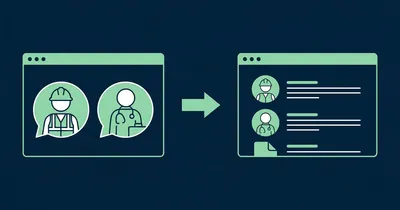
Team videos — short clips where two or three people from the same team introduce what they work on and how they collaborate — are particularly effective for roles where team dynamics matter. A candidate evaluating a position on the engineering team wants to see the engineering team. Not a general culture video. A 60-second introduction to the specific team they would be joining answers the questions no job listing can.
“We noticed quickly that candidates who had watched a team video came to the interview with completely different questions. They were better prepared, more genuinely interested, and had a realistic picture of who we are. Our hire quality improved noticeably.”
How to get started without a film crew
The most common reason organisations do not use video in recruitment is not lack of intent — it is the perceived complexity. Film crews, editing, approval rounds: it sounds heavy.
It does not have to be. Authenticity beats production quality. Candidates trust unpolished clips from real employees more than scripted brand films. A clip recorded in a browser is in many cases more effective than a video produced for a significant budget — because it is real.
Gobi Autopilot is designed to solve the logistics problem. Here is how the workflow works: you add the names and email addresses of the employees you want to involve, choose a question template suited to the purpose, and set a deadline. Gobi sends personalised email invitations to each participant with a unique link — no app download, no account creation. They open the link, film directly in the browser with teleprompter-guided questions, and GDPR consent is collected automatically within the same flow.
You receive finished drafts in Gobi Studio for review and approval. From there you can edit, add subtitles, and publish — directly to the career page, the job listing, or social media. Invite ten employees on Monday and you can have publishable videos by Wednesday.
You do not need a content team. You do not need to coordinate a film crew. You just need to send an email. See our complete guide to employee video for more on planning and running a collection at scale.
Frequently asked questions
What is the fastest way to attract more candidates?
The fastest way to attract more candidates is to make it clear who you actually are as an employer — not just what the role requires. Employee videos in job listings and on career pages give candidates the cultural insight they are actually looking for, and increase the share of qualified applicants without requiring a larger advertising budget. Organisations using employee video in recruitment see on average 35% more qualified applicants.
What is the difference between employer branding and recruitment?
Employer branding is the ongoing work of shaping what the talent market thinks about you as an employer — the reputation you build continuously, regardless of whether you are actively hiring. Recruitment is the operational process of finding and hiring specific candidates for specific roles. The distinction matters: weak employer branding means every recruitment effort starts at a disadvantage, because the best candidates have already filtered you out. Strong employer branding makes recruitment faster, cheaper, and more effective.
Does employee video work across all industries?
Yes. A common misconception is that employee video only works in tech or creative industries. Experience points in the opposite direction: industries where candidates carry strong preconceptions — manufacturing, public sector, retail — often see the greatest impact from authentic video content, precisely because candidates’ picture of what the working day looks like is inaccurate. Read more about attracting candidates with employee video and the trust mechanism behind it.
How long should an employee video for recruitment be?
An employee video for recruitment should be between 45 and 90 seconds. That is long enough to say something meaningful, and short enough for a candidate to watch the whole clip. Research on video engagement shows that the first 10 seconds are decisive — get to the point quickly. Vertical format in 9:16 works best, as it is optimised for the mobile screens where most candidates consume content.
The candidate pool has not shrunk. The threshold for attention has risen. Candidates — particularly those with experience and options — are no longer persuaded by generic job listings and polished brand presentations. They are looking for employers who are willing to show who they actually are.
Want to see how Gobi can help you produce and publish employee videos without a film crew? See what Gobi Studio does. For a full picture of the candidate journey, read our guide on building a better candidate experience with video.